Our take: HarnessRouter suits developers who want to put Codex, Claude Code or Hermes behind one API in their own product and pay only for active agent-work minutes plus model usage at catalog price.
Main limitation: Free plan allows 30 agent-work minutes and 2 concurrent tasks, tracing is included only with Scale in beta, and agent memory is billed separately.
By the AI Tool Atlas editors.
Based on the vendor's official documentation; we have not tested this product hands-on. What “documented overview” means
Is HarnessRouter right for you?
HarnessRouter suits developers who want to put Codex, Claude Code or Hermes behind one API in their own product and pay only for active agent-work minutes plus model usage at catalog price. Based on the vendor's documentation, not on a hands-on test.
Best for: Developers building agent-powered products
Also a good fit for
Teams comparing Codex, Claude Code and other harnesses
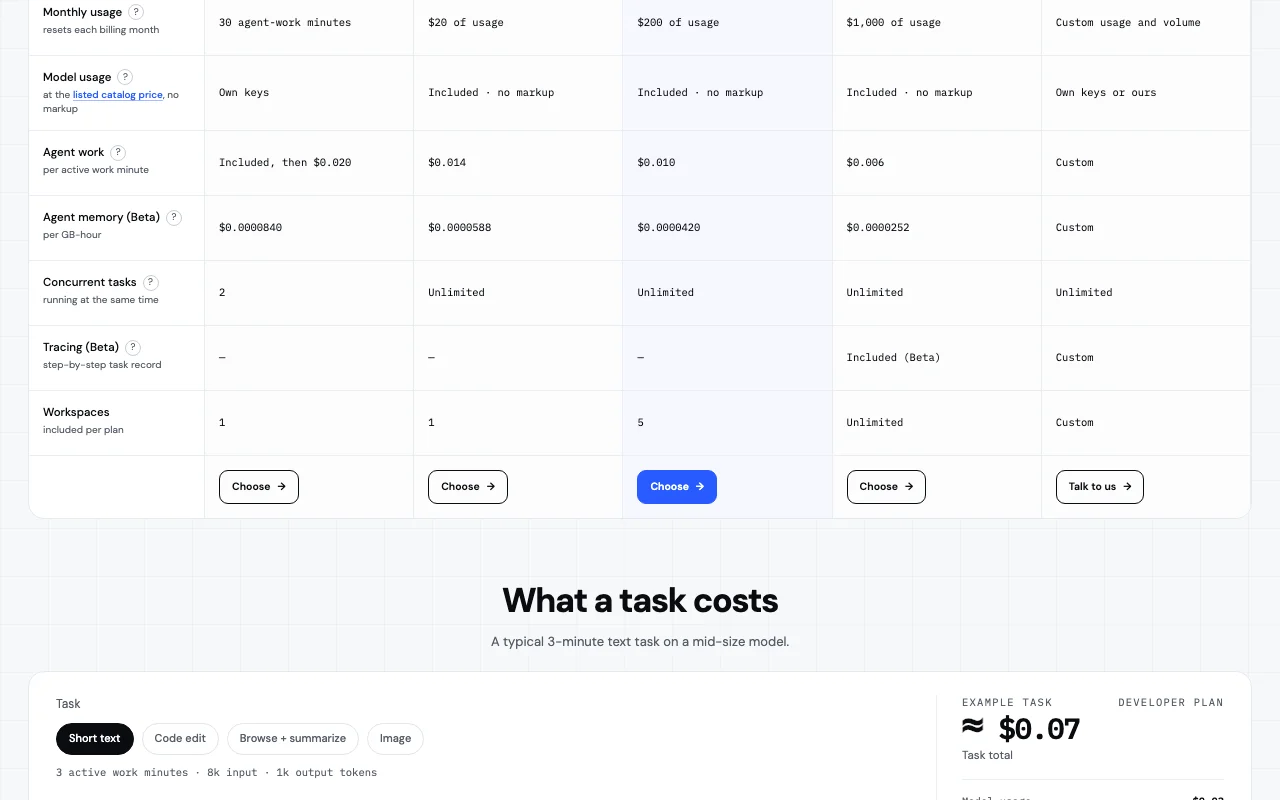
Top-up credit $10 minimum with 5.5% processing fee (minimum $0.80), agent work $0.020 per active minute off-plan, agent memory $0.0000840 per GB-hour on Free, tracing add-on $50 per month
Not stated
What is HarnessRouter, and how does it work?
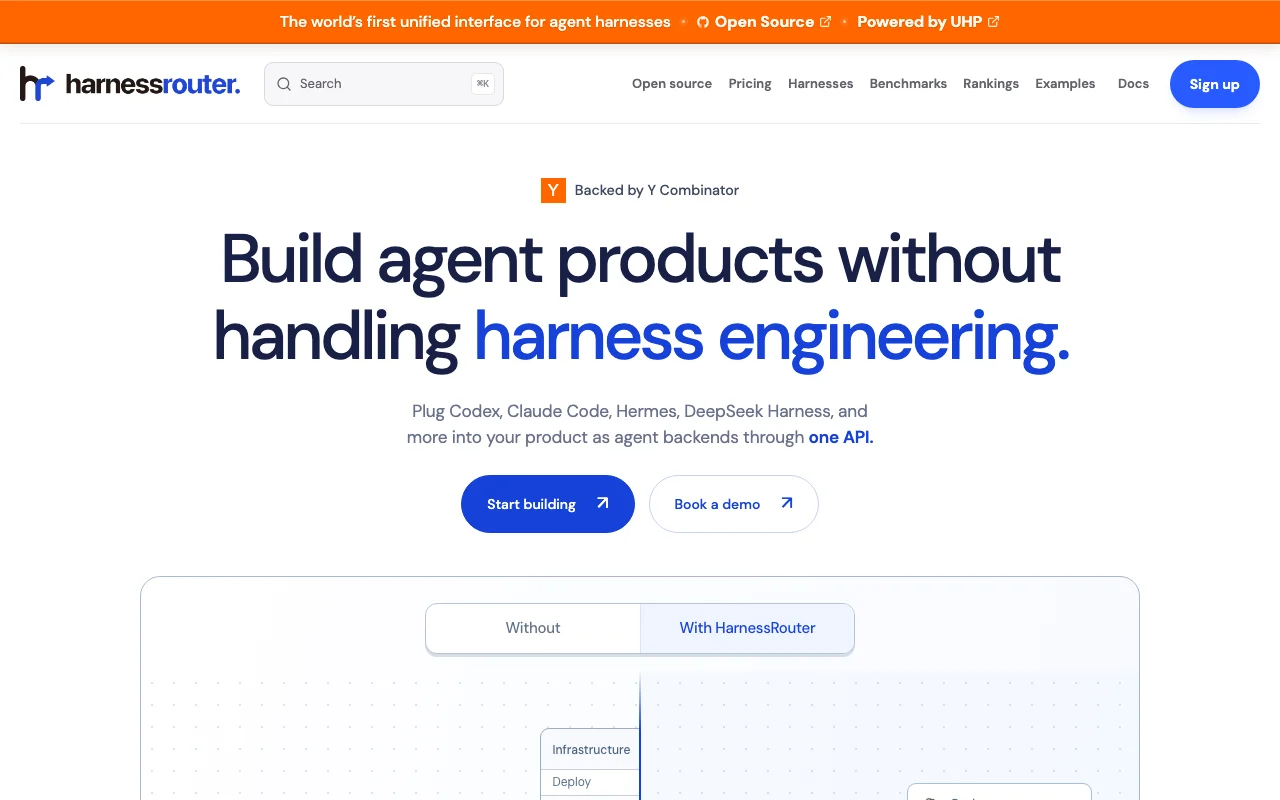
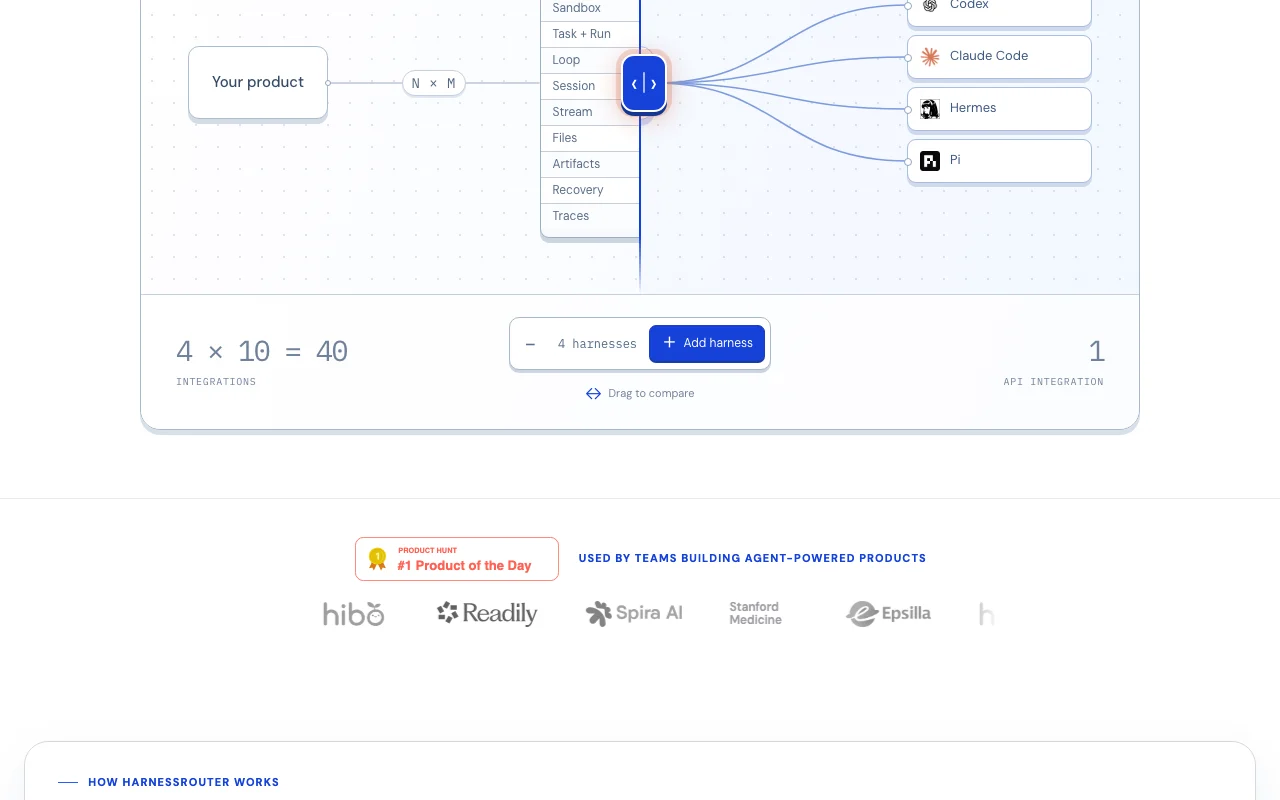
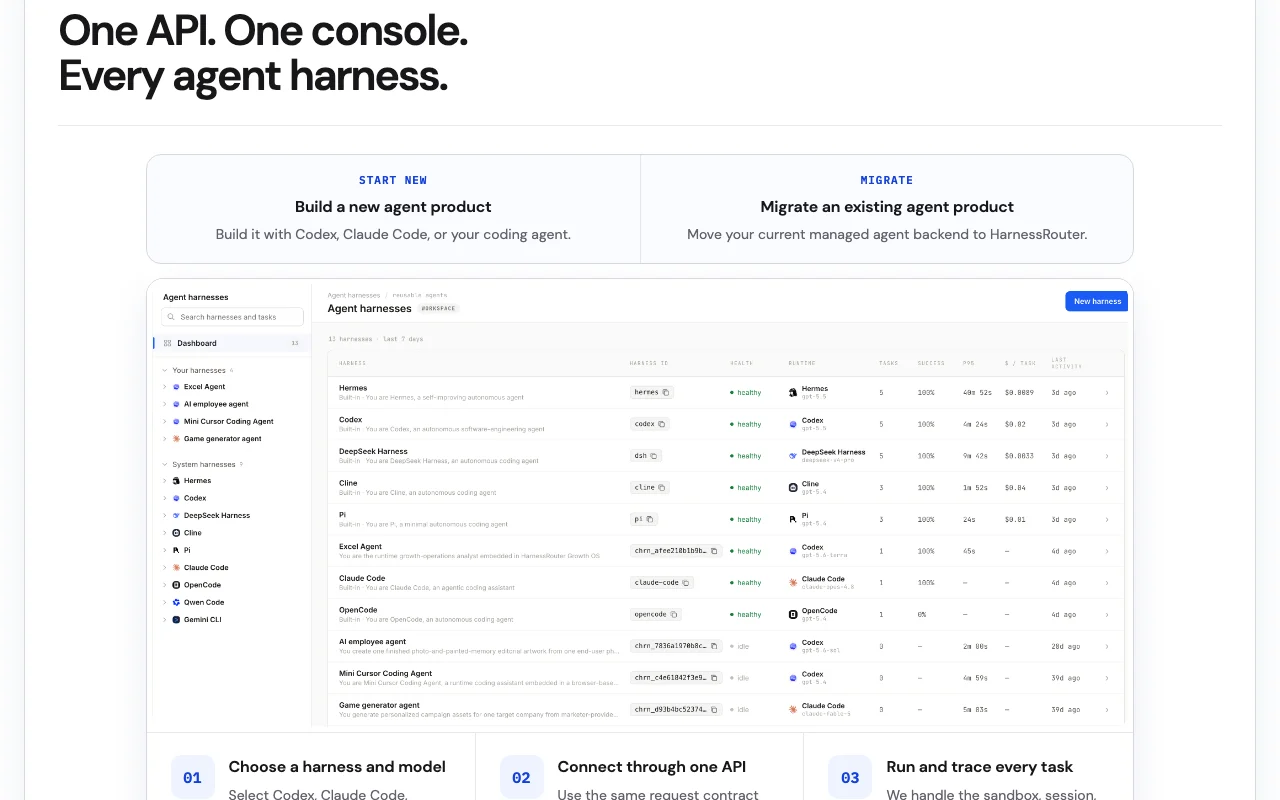
HarnessRouter provides a unified API and console for running agent harnesses such as Codex, Claude Code, Hermes, DeepSeek Harness and Qwen Code as backends for your product. Each task runs in an isolated sandbox that HarnessRouter provisions and operates, with streaming, session continuation, file artifacts and recovery handled by the platform.
The open-source Community Edition (Apache 2.0) implements the same Unified Harness Protocol for self-hosting. The Cloud offering bills model usage at catalog price with no markup, or lets you bring your own provider keys, and charges only for active agent work minutes; a Harness Arena compares time, cost and accuracy across harness and model combinations.
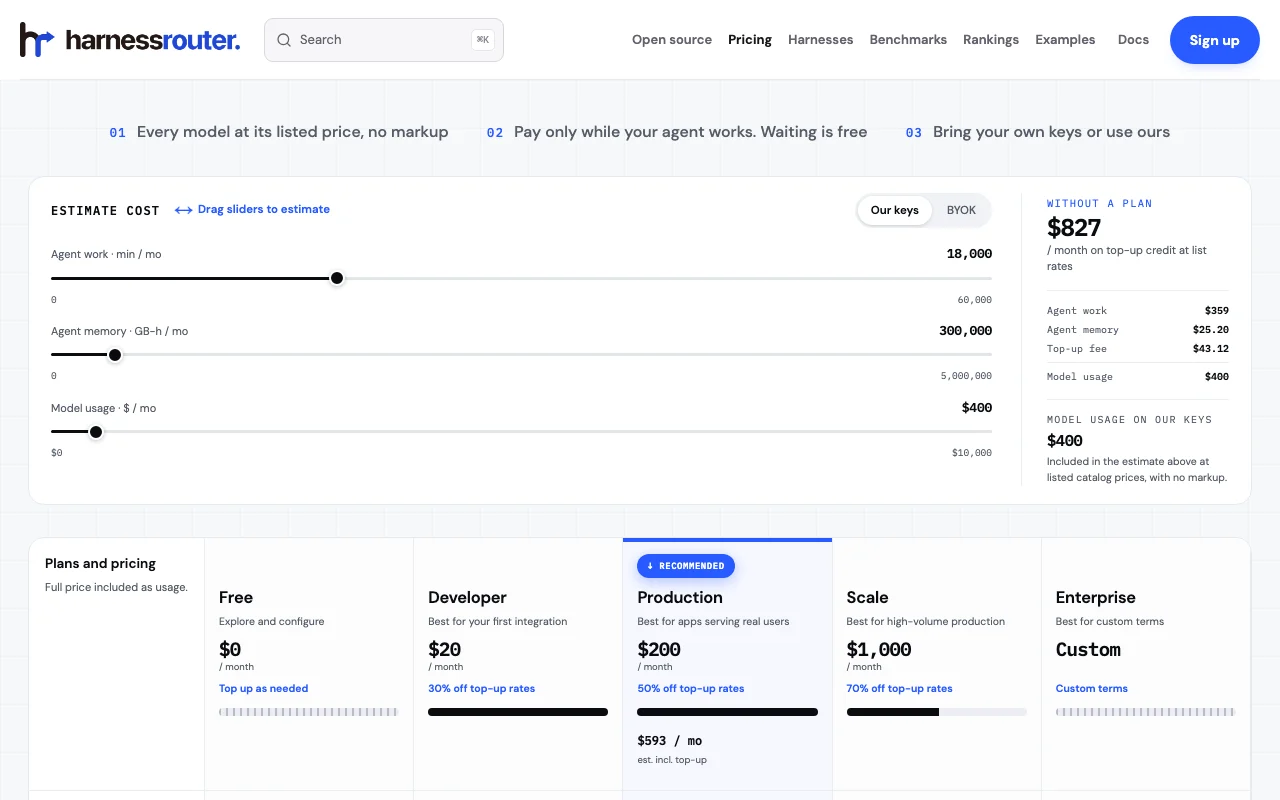
HarnessRouter's official site: how the product presents itself. harnessrouter.ai, captured Oct 1, 2026
What you provide and what you get back
What you give HarnessRouter and what comes back, from its documentation
You provide
Task prompt sent through the API
Choice of harness and model
Your own provider keys or platform keys
Files and tools for the sandbox
You get back
Streamed agent events
File artifacts
Per-task receipt with cost breakdown
Retained step-by-step record
Where you can use it
Platforms
Web, API
Account
Required
Where HarnessRouter is most useful
Scenarios are worked out by our editors from the documentation; the actual result depends on your input and plan.
Adding agent-backed features to a SaaS product without building harness infra
Who
SaaS developers
You provide
Task requests from your product's users
Expected result
Agent-backed feature running in an isolated sandbox
Free plan with no card required You are charged only for steps and tools actually runningdocumentedsource (opens in a new tab)
Model usage billed at listed catalog price with no markup You can predict cost per task from a receiptdocumentedsource (opens in a new tab)
Idle waiting time is not billed You only pay a platform fee when usage is high enoughdocumentedsource (opens in a new tab)
Self-hosted open-source option available You can run the same protocol on your own infrastructuredocumentedsource (opens in a new tab)
Limitations to check before paying
Free plan limited to 30 agent-work minutes and 2 concurrent tasks Hobby projects exhaust the free quota quicklydocumentedsource (opens in a new tab)
Tracing only included on the $1,000 Scale plan while in beta Debugging on lower tiers has less visibilitydocumentedsource (opens in a new tab)
Agent memory billed separately per GB-hour Long-lived agents add a second metered linedocumentedsource (opens in a new tab)
Requires integration work in your own product You need engineering time to wire it indocumentedsource (opens in a new tab)
How to use HarnessRouter for running an agent harness as a backend for your product
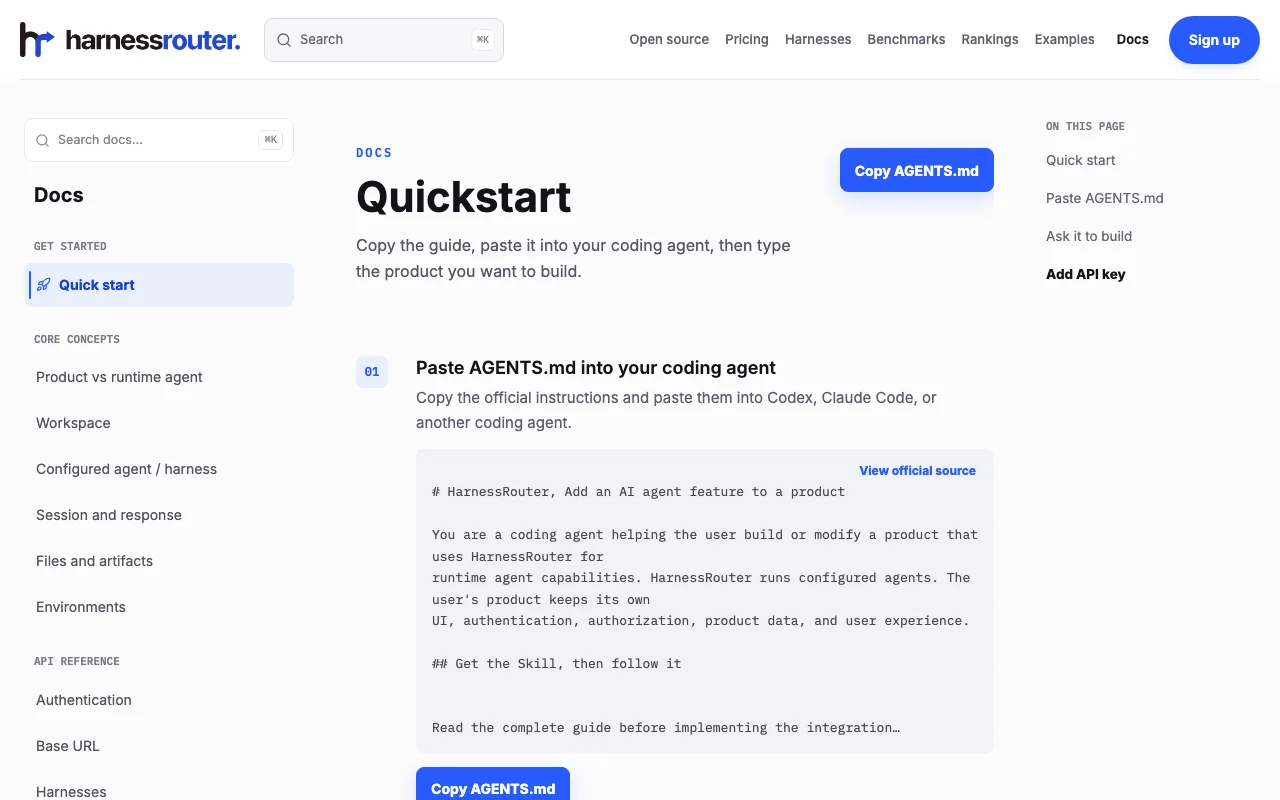
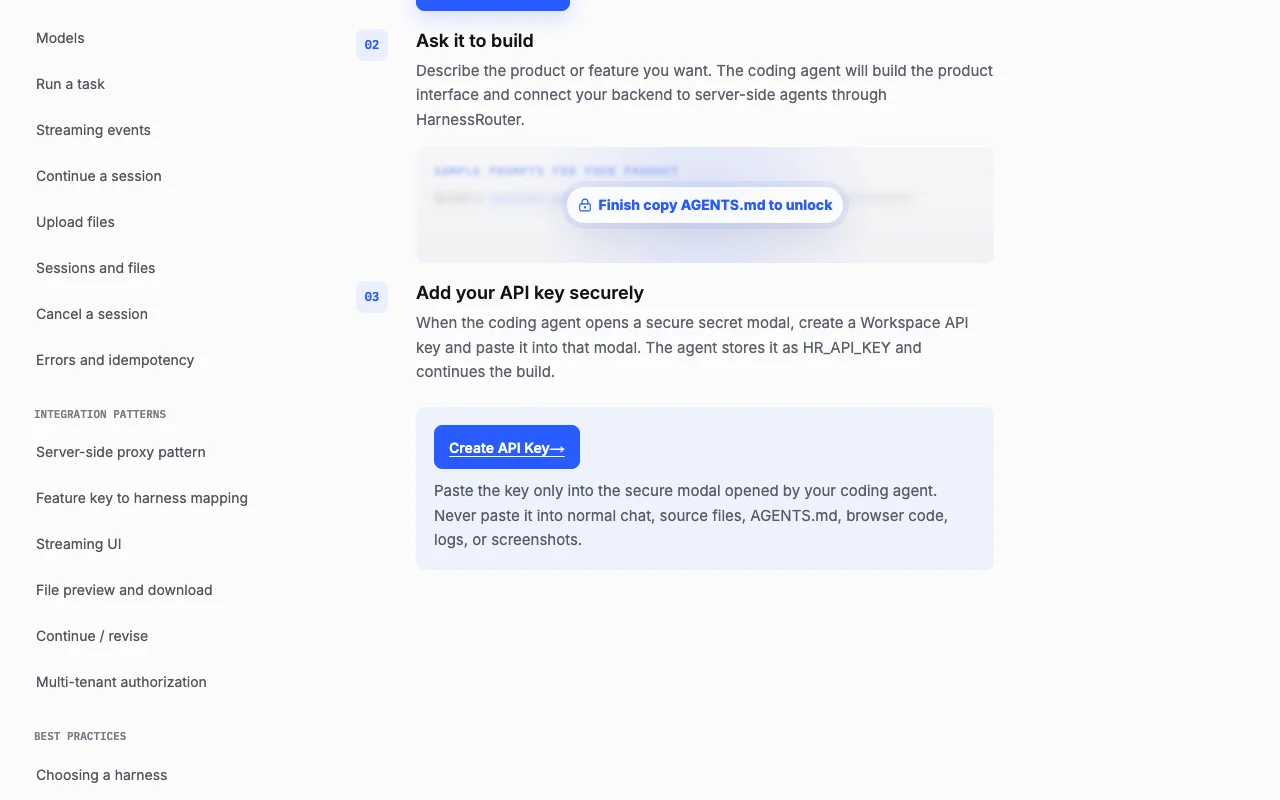
HarnessRouter documentation: where the steps below come from. harnessrouter.ai, captured Oct 1, 2026
Set up HarnessRouter
Create a free HarnessRouter account and open the console
Create a workspace and add your provider keys, or top up credit for platform keys
Choose a harness such as Codex or Claude Code
Example: running an agent harness as a backend for your product
Send a task request to the API with the chosen harness and model
Stream events and read the produced file artifacts
Continue the same session with a follow-up request
Open the receipt to see agent-work, memory and model lines
Review and export the result
Check that waiting time shows as $0.00 free wait time on the receipt
Compare cost across harnesses in Harness Arena before settling
Example prompt suggested by our editors (not a recorded output of the product)
Review the attached repository for failing tests, fix the smallest bug you can find, and return the patch as a file artifact.
HarnessRouter integrations and API
HarnessRouter documentation (continued). harnessrouter.ai, captured Oct 1, 2026
Native integrations and export formats
Export: File artifacts
API access and separate billing
HarnessRouter has no public API in its official documentation. Unified Harness Protocol; open-source Community Edition under Apache 2.0 API documentation ↗
Privacy, data use and commercial rights
Summarized from the vendor's current policies; this is not legal advice and a vendor's badge is not an independent audit.
How your inputs and outputs are handled
Each task's step-by-step record is retained with its cost breakdown
unknown
7 days on the free plan; longer on paid plans per the pricing FAQ
Plans are Free at $0, Developer at $20, Production at $200 and Scale at $1,000 per month, each including that amount in usage; Enterprise is custom. source (opens in a new tab)
What is billed as agent work?
Executing a step or tool such as running code or browsing, at $0.020 per active minute off-plan; waiting for models, you or queues is free. source (opens in a new tab)
Is there a markup on models?
No, models are billed at their listed catalog price, or you bring your own keys and your provider bills you. source (opens in a new tab)
Not verified: Training use; Docs content (fetch); Retention on paid plans.
How we documented and maintain this page
Every fact about HarnessRouter above comes from the 3 official pages listed here, last compared on Oct 1, 2026; we have not run HarnessRouter ourselves, so it has no editorial score. How we check and re-check pages.
Article updated Oct 10, 2026; prices checked Oct 1, 2026. Outbound links to vendors are plain links; we do not earn commissions. How we review · Report an error